Your Next Trip TRAVEL GUIDE
Rocky Mountaineer Canada Route
Vancouver to Banff
Join Dayvee Sutton aboard the Rocky Mountaineer for its signature two‑day journey from Vancouver to Banff. Glide through coastal rainforests, deep river canyons and alpine forests, settle into a dome car with panoramic views, sample chef‑crafted meals and stories, overnight in Kamloops, then awake to sweeping peaks and glacier‑fed lakes. It’s a slow‑travel adventure that invites you to simply look out the window.
Now, check out our recommendations featured in this episode and more!


What to do
Rocky Mountaineer – First Passage to the West
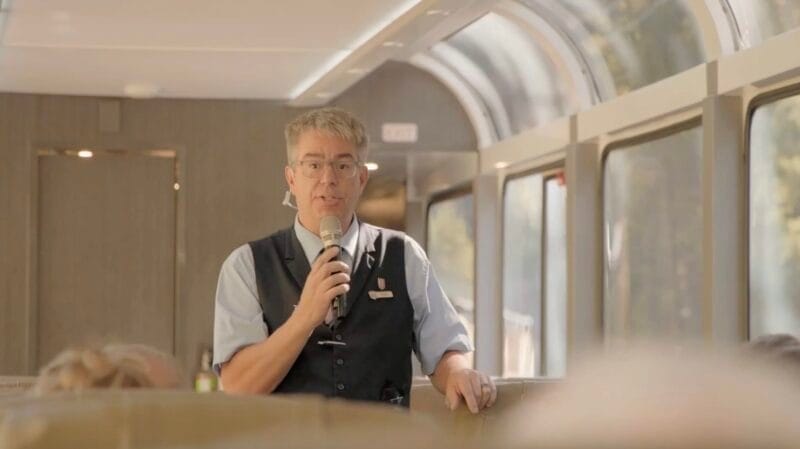
Experience a two-day daylight-only train journey through Western Canada aboard the Rocky Mountaineer. With panoramic dome-cars, luxury seating, and gourmet meals, this route takes you from the coast in Vancouver, through dry interior valleys, across mountain passes, and into the Canadian Rockies.
Route: Vancouver → Kamloops → Banff (or Lake Louise)
Season: Mid-April to early October
Travel Days: 2 days, with one overnight hotel stay in Kamloops
Hours of Travel: Approx. 8–10 hours per day, daylight only
Cost: Starting around CAD $2,289 for SilverLeaf, and CAD $3,065+ for GoldLeaf
HELPFUL NOTES
Interior Valleys
After the rainforest near Vancouver, the train enters British Columbia’s dry interior before climbing into the Rockies.
Scenic Features
Highlights include Fraser Canyon, Thompson River Valley, the Spiral Tunnels, and Kicking Horse Pass.
Service Levels
SilverLeaf features single-level dome seating with meals at your seat. GoldLeaf includes bi-level dome cars with a full glass ceiling and a dining room below.
Where to stay
Delta Hotels by Marriott Kamloops
Modern downtown hotel in Kamloops, ideal for the overnight stop.
Address: 540 Victoria St, Kamloops, BC V2C 2B2, Canada
Check-in / Check-out: 3:00 PM / 12:00 PM
Cost: Mid-tier nightly rates (seasonal)
Website: Delta Hotels by Marriott Kamloops
Elk + Avenue Hotel, Banff
Boutique upscale hotel in Banff, steps from shops and restaurants, perfect for the journey’s conclusion.
Address: 6 Elk Ave, Banff, AB T1L 1C3, Canada
Cost: Seasonal rates
Website: Elk + Avenue Hotel, Banff
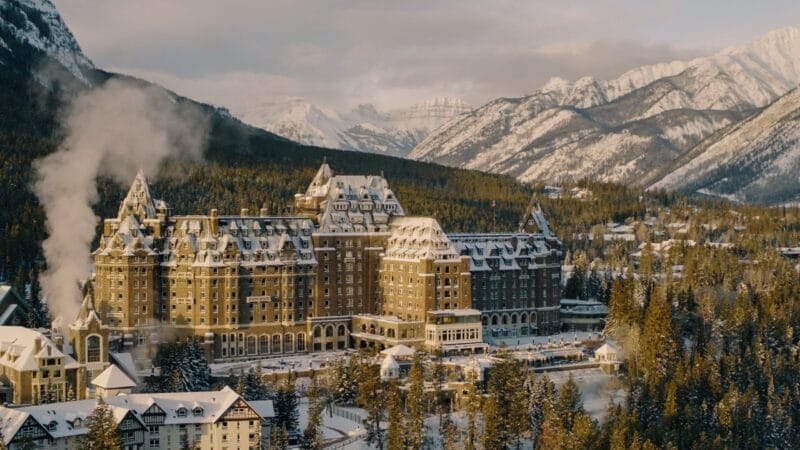
Fairmont Banff Springs Hotel
Luxury resort styled like a “castle in the Rockies”—an ideal splurge to cap your rail journey.
Address: 405 Spray Ave, Banff, AB T1L 1J4, Canada
Cost: Premium resort pricing
Website: Fairmont Banff Springs Hotel
And there’s tons of other fabulous places to stay during your trip.
Check out the best accommodation deals below.


Travel Tips
Best Time to Visit
The Rocky Mountaineer runs from mid-April to early October, with each season offering something different.
Spring (April–May): Expect snowcapped peaks, waterfalls in full flow, and fewer crowds.
Summer (June–August): Warmer temps and longer days, with vibrant greens in the valleys.
Fall (September–October): Crisp air and changing foliage make this a favorite for photographers.Getting Around
VANCOUVER:
Public transit is excellent. Use the SkyTrain, buses, or SeaBus to explore. Taxis and ride-share apps (Uber, Lyft) are also widely available.
BANFF
Most attractions are within walking distance from downtown. Roam Transit offers local bus service to major sights including Lake Louise and Johnston Canyon.Safety Tips
Altitude: Banff sits at around 4,600 feet—hydration and pacing help if you're not used to elevation.
Wildlife: If you're hiking before or after the train, be aware of bears and elk. Carry bear spray and know how to use it.
Weather Variability: Weather in the Rockies can change quickly. Dress in layers and bring rain gear, even in summer.Helpful Notes
Currency: Canadian Dollar (CAD). Credit cards are widely accepted, but it's handy to have some cash for tips or small purchases.
Tipping: 15–20% is standard at restaurants and for service staff.
Luggage: Your checked luggage is transferred between train and hotel each day. Keep a day bag with medications, cameras, and essentials onboard.
Wi-Fi/Cell Service: There is no Wi-Fi or cell service onboard the Rocky Mountaineer. This is a true unplugged experience.
Border Tips: U.S. travelers don’t need a visa, but bring your passport for entry into Canada.
Plug Type: Type A (two-pin) and Type B (three-pin, grounded)
Voltage: 120V
Frequency: 60Hz

Packing list
Planning for this two-day daylight-only train journey means thinking in layers, not luggage. You won’t access your main suitcase during the day, so what’s in your carry-on matters. The key: comfort, weather versatility, and unplugged travel essentials.
Day Bag Essentials (for use onboard the train):
Light jacket or sweater (temperature can vary in the dome cars)
Sunglasses (the dome cars let in a lot of light)
Lip balm and hand cream (train cabins can be dry)
Refillable water bottle (stay hydrated at elevation)
Camera or phone (for photos — Wi-Fi and service are unavailable onboard)
Chargers and power bank (no seat-side outlets in SilverLeaf)
Book, journal, or offline entertainment
Prescription medications or daily essentials
Clothing:
Base layers for spring or fall (merino or moisture-wicking)
T-shirts and long sleeves for layering
Fleece or insulated jacket for Banff mornings
Windbreaker or light rain jacket
Comfortable pants or jeans
Casual outfits for dinners off-train in Kamloops and Banff
Dressier outfit if staying at upscale hotels (e.g., Fairmont Banff Springs)
Footwear:
Comfortable walking shoes or sneakers
Optional: waterproof shoes or boots for exploring Banff or Lake Louise
Extras (based on season):
Gloves, hat, and scarf (especially for spring or fall)
Binoculars (for spotting wildlife or distant peaks)
Swimsuit (some hotels have hot tubs or spas)
Travel umbrella or compact rain poncho
Sunscreen (UV is strong at elevation—even in cool temps)
Pro Tips:
Pack light layers instead of bulky items—weather shifts between Vancouver, Kamloops, and Banff.
Keep your outfit relaxed; this is luxury travel without the dress code.
Bring a small amount of Canadian cash for incidental tips or snacks in town.
Get a full packing list and free downloadable template at Pack Better.
Ultimate Packing List Library
Find the perfect customizable packing list for all of your travel situations on our sister website Pack Better.
This episode of "Your Next Trip" explored the ancestral lands of
- Dënéndeh ↗
- Dakeł Keyoh (ᑕᗸᒡ ᗲᘏᑋ) ↗
- Yekooche ↗
- Takla ↗
- Ĩyãħé Nakón mąkóce (Stoney) ↗
- ᓀᐦᐃᔭᐤ ᐊᐢᑭᕀ Nêhiyaw-Askiy (Plains Cree) ↗
- Woodland Cree ↗
- Cree ↗
- Michif Piyii (Métis) ↗
We extend our respect and gratitude to the Indigenous communities who have been the stewards of these lands for generations. Research for this acknowledgment was made possible using the NativeLand.ca.
Learn more about responsible travel practices in the TWD Responsible Travel Guide.
Visit the guideTrip provided by: Rocky Mountaineer