Your Next Trip TRAVEL GUIDE
Lebanon
In this episode, we explore Lebanon—a country shaped by ancient civilizations, natural wonders, and remarkable resilience. From Beirut’s layers of Roman, Byzantine, and modern history to the breathtaking Jeita Caves, Lebanon reveals itself as a land full of contrasts. The journey ends in Byblos, the world’s oldest continuously inhabited city, where Phoenician temples, Roman ruins, and Crusader fortifications sit side-by-side. This trip uncovers a nation where every stone holds a story, and where the past and present live in the same breath.
Now, check out our recommendations featured in this episode and more!
Planning a Trip to Lebanon
Lebanon is incredible, but it’s not a casual “just wing it” destination right now.
Safety Snapshot
The latest U.S. State Department advisory has Lebanon at Level 4: Do Not Travel due to crime, terrorism, civil unrest, kidnapping, and the risk of armed conflict. You can check the status HERE.
If someone does decide to go (or has a long layover like you did), the safest move is to book a vetted local guide or organized tour that tracks the situation on the ground day by day.
A note for all readers: Always check your own government’s latest travel advisory right before you go, and consider travel insurance that covers cancellations and emergencies.
Visas & Entry (U.S. Travelers)
U.S. citizens can usually get a visa on arrival for up to 1 month for tourism at Beirut–Rafic Hariri International Airport, as long as your passport is valid 6+ months and you don’t have Israeli stamps.
For stays longer than a month, the Lebanese embassy/consulate recommends applying in advance.
Money & How to Pay
Lebanon is still in a deep financial crisis; card payments and ATMs can be unreliable. Many travelers and tour operators recommend bringing clean U.S. cash and paying in cash for guides, drivers, meals, and activities.
Getting Around
Distances are short, but traffic is wild and road conditions can change fast.
Many visitors book full-day private or small-group tours from Beirut that hit Jeita Grotto, Our Lady of Lebanon (Harissa), and Byblos in one day with hotel pickup, AC vehicle, and a guide.

What to do
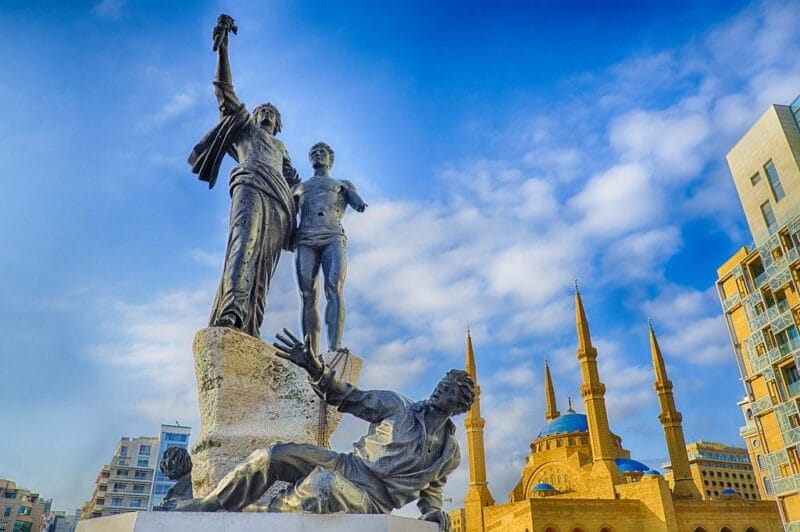
Beirut Downtown Walk: Martyrs’ Square, Roman Ruins & Beirut Blast Site
Why go: This is where your “layers of Lebanon” theme really hits. You can see Ottoman-era buildings, French Mandate architecture, modern glass towers, and ancient ruins all sharing the same blocks.
Short walk can include:
Martyrs’ Square – symbolic heart of political protests, including the 2019 uprising.
Roman & Phoenician ruins scattered around the Beirut Central District, including remains of the Roman law school and ancient streets.
A distant view of the 2020 Beirut port blast site from the highway or nearby vantage points – a sobering reminder of very recent history.
Address: Beirut Central District & Martyrs’ Square, Downtown Beirut, Lebanon
Hours: Public streets & squares – open 24/7; visit in daylight for safety & context
Pigeon Rock (Raouché) – Beirut’s Iconic Sea Cliffs
Why go: This is your “Lebanon is Mediterranean, not desert” visual proof. Towering limestone sea stacks, crashing waves, and cafés lining the Corniche.
Great spot for sunset photos.
Locals and visitors stroll the Corniche (seafront promenade) here, grab street snacks, or sit in cliff-top cafés.
Address: Raouché (Raouché Sea Cliffs / Pigeon Rocks), Western Beirut seafront
Hours: Viewpoint and Corniche are open all day; sunset is prime time
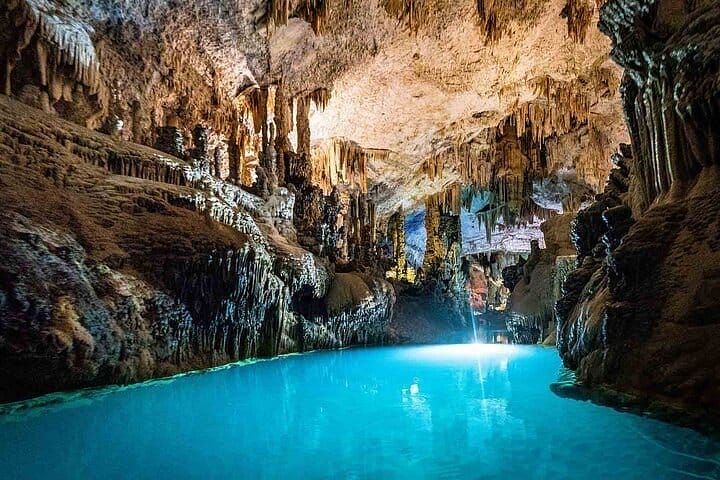
Jeita Grotto – Lebanon’s Underground Wonder
Why go: One of the longest and most spectacular cave systems in the Middle East, Jeita has an upper dry cave and a lower cave with an underground river and short boat ride. It was a finalist in the New7Wonders of Nature campaign.
Features towering stalactites and stalagmites over millions of years old.
Archaeological finds show prehistoric human presence in the area, tying into your “guardian of human history” phrasing.
No photos allowed inside, so tell people to be present in the moment – and stash some exterior/entrance shots for your edit.
Address: Jeita Grotto, Valley of Nahr al-Kalb, Jeita, Keserwan District (~20 km north of Beirut)
Hours: Generally Tue–Sun 9:00–16:00, closed Mondays (hours can vary seasonally; always check ahead).
Cost: Around US $15 per adult, usually including cable car, mini train, upper cave visit & lower cave boat ride.
Website: Jeita Cave Tours
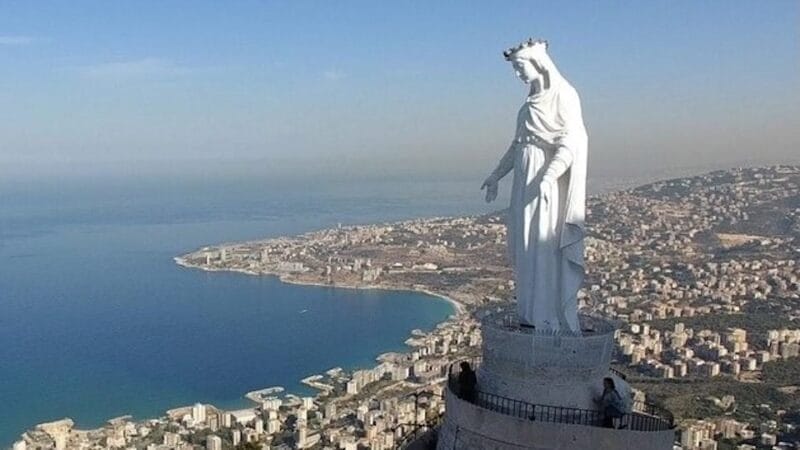
Our Lady of Lebanon (Harissa) – Panoramic Shrine Above Jounieh
Why go: This is where faith, landscape, and modern Lebanese identity intersect. Most Jeita/Byblos tours also stop here.
Statue and church overlooking Jounieh Bay, reached by teleferique (cable car) or road.
After Lebanon’s civil war, Pope John Paul II famously said, “Lebanon is more than a country; it is a message of freedom and an example of pluralism for East and West” – and this site is often referenced in that spirit of coexistence.
Address: Harissa Hill, above Jounieh, Mount Lebanon
Hours: Typically daily, roughly daylight to evening; exact hours vary by season & services
Cost: Shrine itself is free; cable car ticket is extra (usually just a few dollars; check locally or via tour).
Website: Tour & Tickets
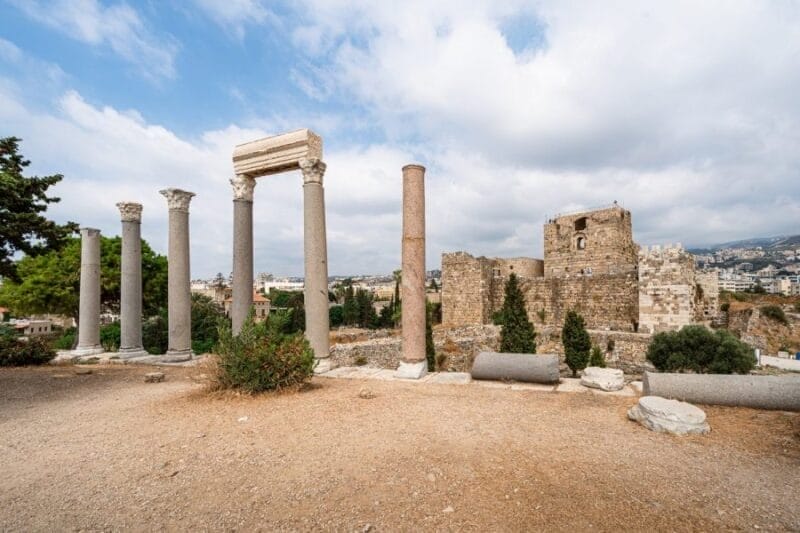
Byblos Archaeological Site & Old Port
Why go: This is your episode’s anchor – one of the oldest continuously inhabited cities on Earth and a UNESCO World Heritage Site, with layers from Neolithic settlements to Phoenician temples, Roman colonnades, and Crusader fortifications.
Highlights:
Crusader Castle built using stones scavenged from earlier Greek, Roman, and Phoenician ruins.
Foundations of Phoenician temples, city walls, and a royal necropolis.
Inscriptions and artifacts tied to the early alphabet – Byblos is central to the story of written language.
The atmospheric old harbor & souk, perfect for evening strolls and seaside meals.
Address: Byblos Archaeological Site, Byblos (Jbeil), ~42 km north of Beirut.
Hours (approx.):
Mon–Thu: 9:00–17:00
Fri: 9:00–22:00
Sat–Sun: 9:00–20:00 (can vary seasonally/holidays; check locally).
Cost: Roughly US $8–10 for foreigners (cash, price fluctuates with currency; local sources list ~€10 or 800,000 LBP).
Where to stay
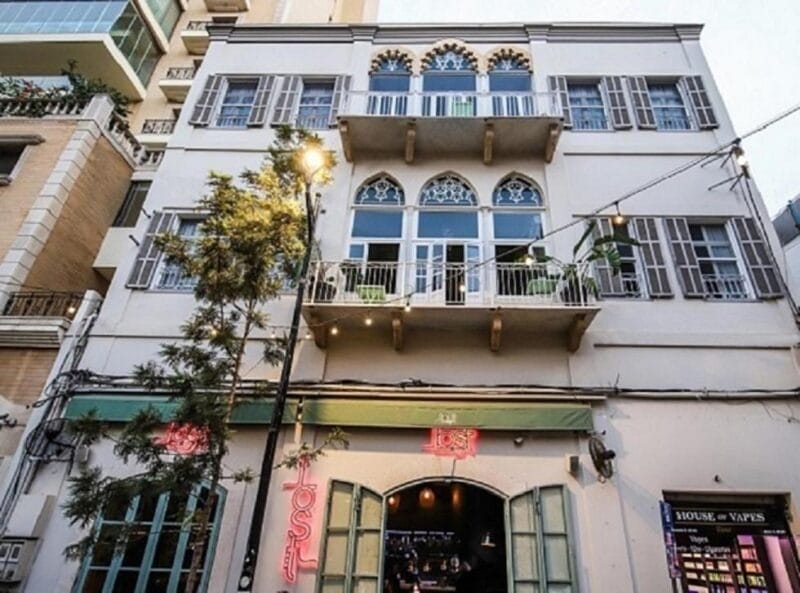
LOST Hotel – Gemmayzeh
(Where Dayvee Stayed)
LOST Hotel – Gemmayzeh
Why stay: Artistic, intimate, and locally owned, LOST sits in one of Beirut’s most creative neighborhoods. Perfect for travelers who want character, charm, and a strong sense of place.
Address: Gouraud Street, Gemmayzeh, Beirut
Hours: Check-in ~2 PM; Check-out ~12 PM
Cost: Mid-range ($$)
Website: Lost Hotel
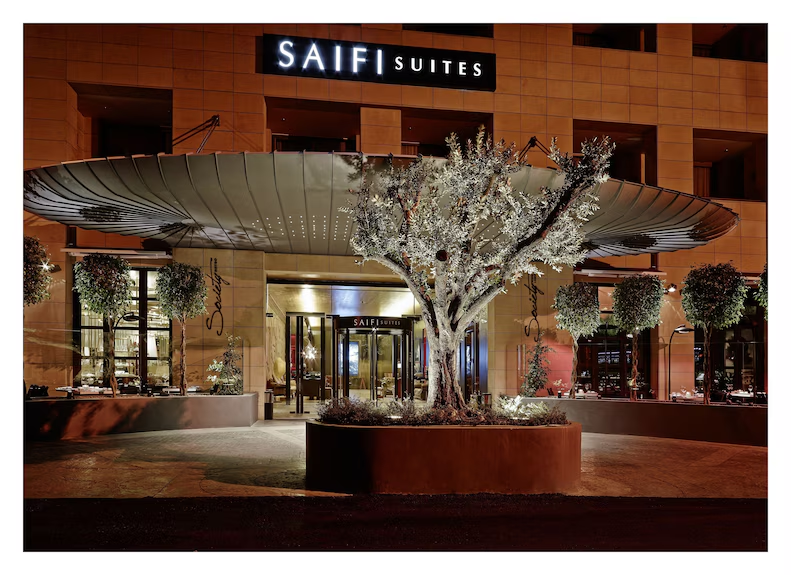
Saifi Suites – Downtown Beirut
Why stay: A polished boutique hotel near Beirut’s central district, ideal for travelers who want comfort with easy access to dining, shopping, and historic sites.
Address: Maroun Naccache Avenue, Saifi, Beirut
Hours: Check-in ~3 PM; Check-out ~12 PM
Cost: Upper mid-range ($$–$$$)
Website: Saifi Suites – Downtown Beirut
Hotel Albergo – Achrafieh
Why stay: A Relais & Châteaux property set in a beautifully restored mansion. Think elegant suites, rooftop views, and refined dining — a great splurge option.
Address: Abdel Wahab El Inglizi Street, Achrafieh, Beirut
Hours: Check-in ~2 PM; Check-out ~12 PM
Cost: Luxury ($$$–$$$$)
Website: Hotel Albergo – Achrafieh
And there’s tons of other fabulous places to stay during your trip.
Check out the best accommodation deals below.


What to eat
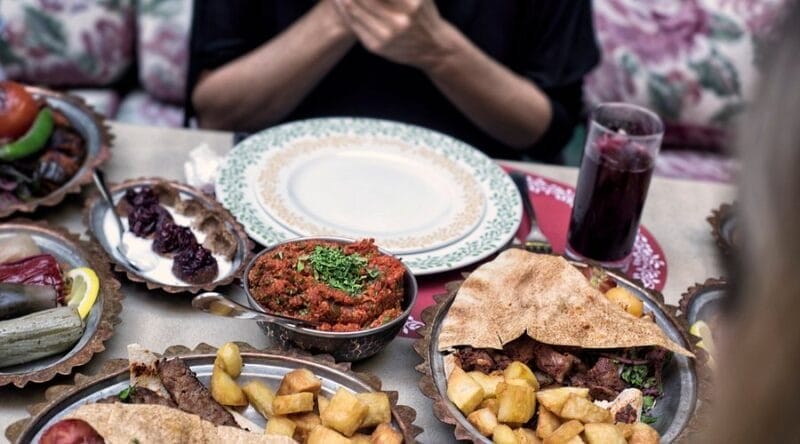
Em Sherif
What to try: A lavish traditional Lebanese dining experience featuring a set menu of mezze, grilled meats, stews, and desserts.
Address: Victor Hugo Street, Achrafieh, Beirut
Hours: Lunch & dinner service daily
Cost: $$$ (around $65+ per person)
Mayrig (Armenian–Lebanese Cuisine)
What to try: Mante dumplings, soujouk, and the famous sour cherry kebab — a blend of Armenian flavors with Lebanese influence.
Address: Pasteur Street, Gemmayzeh, Beirut
Hours: Typically 12 PM–12 AM
Cost: $$$
T-Marbouta
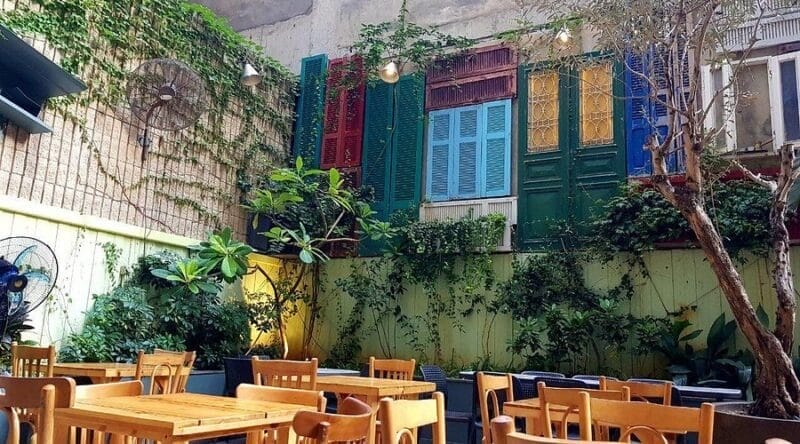
What to try: Home-style Lebanese dishes, great vegetarian and vegan options, and a relaxed community vibe in the heart of Hamra.
Address: Hamra Square, Hamra, Beirut
Hours: Open late; generally from late morning to night
Cost: $–$$
Travel Tips
Best Time to Visit
Lebanon has a Mediterranean climate, which means:
Spring (April–June) is one of the best times to visit — mild temperatures, blooming landscapes, and ideal conditions for exploring coastal cities and mountain villages.
Fall (September–November) offers warm, comfortable weather with fewer crowds and clearer skies.
Winter (December–March) is rainy on the coast but perfect for skiing or snow activities in the mountains.
Summer (July–August) is hot and humid along the coast, but popular for nightlife and beach clubs.
Note: Always check current regional conditions before planning.Getting Around
Transportation in Lebanon is unique — here’s what travelers should know:
Private drivers and guided day tours are the most reliable way to move between cities. Roads and traffic patterns can be challenging for first-time visitors.
Taxis and local apps (like Bolt) operate in Beirut, though availability varies by area and time of day.
Car rentals are available, but driving isn’t recommended for most travelers due to unpredictable traffic, fast highway conditions, and limited signage.
No functioning national rail system and limited formal public transportation, so plan around cars and private transport.Safety Tips
These practical, traveler-friendly reminders can help ensure a smoother experience:
- Stick to well-known areas and avoid traveling after dark between cities.
- Monitor local news and ask your hotel or guide about safe routes for the day.
- Keep a copy of your passport and important documents separately from the originals.
- Dress modestly when visiting religious sites or rural towns.
- Expect checkpoint stops on some highways — keep ID handy and stay calm and respectful.
- Avoid discussing politics publicly; Lebanese politics can be sensitive.
Helpful Notes
Currency: Lebanon operates primarily in Lebanese pounds (LBP) and U.S. dollars (USD). Cash is essential. Many places prefer or require USD in clean, newer bills. ATMs and card machines may not always be reliable.
Language: Arabic is the official language, but French and English are widely understood in major cities and tourist areas.
Dress & Etiquette: Beirut is fashion-forward and cosmopolitan, while smaller towns are more conservative. When in doubt: modest, neat clothing works everywhere.
Connectivity: SIM cards are available at the airport and phone shops in Beirut. Internet speeds vary — hotels and cafés tend to have better Wi-Fi.
Health & Watervity: Drink bottled water only. Bring any necessary medications — pharmacies are common but may not carry specific brands.
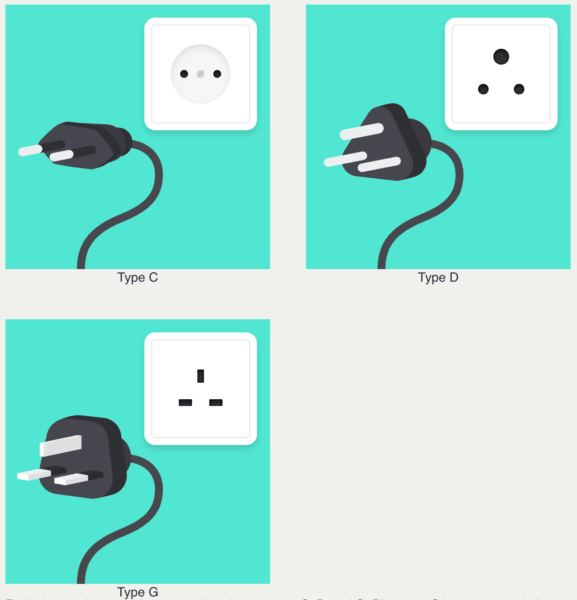
Plug Type: C and D (sometimes G in hotels)
Voltage: 230V
Frequency: 50Hz
Packing list
Here’s our suggested items to pack for this destination. Please always consider the weather and activities you will be doing.
Clothing
Lightweight layers (daytime can be warm; evenings cooler, especially in spring/fall)
Comfortable walking shoes (important for uneven ruins, cobblestones, and the Jeita Grotto pathways)
Closed-toe shoes (Jeita Caves can be damp + rocky)
A light jacket or cardigan (cave interiors and coastal evenings can feel chilly)
Modest clothing options for religious or rural areas
Sun hat or cap (Mediterranean sun can be strong even outside summer)
Sunglasses & breathable tops
Weather + Activity Essentials
Light rain jacket or travel umbrella (coastal winters can be rainy; weather shifts quickly)
Refillable water bottle (you’ll walk a lot; buy bottled water to fill it)
Small daypack for city exploring and cave visits
Moisture-wicking socks for long days on foot
Scarf or shawl (versatile for sun, modesty, or warmth)
Tech & Accessories
Portable charger/power bank (full-day excursions can drain devices)
Camera or phone with good low-light capability (no photos inside Jeita, but great shots everywhere else)
Universal travel adapter
SIM-ready unlocked phone (local SIMs are inexpensive and useful for navigation)
Health & Personal Care
Hand sanitizer + wipes (some sites lack facilities)
Medications & a small first-aid kit
Sunscreen
Motion-sickness tablets if you’re sensitive (winding mountain roads + cave boat ride)
Documents & Money
Passport (valid 6+ months)
Copies of important documents
Cash in clean USD bills (many places prefer or rely on cash)
Travel insurance info
Extras for This Itinerary
A light grip or hiking-style shoe for uneven ancient sites
Breathable mask or bandana (helpful for dust in excavation areas or windy coastal spots)
Notebook or travel journal — Lebanon’s history and stories spark reflection
Get a full packing list and free downloadable template at Pack Better.
Ultimate Packing List Library
Find the perfect customizable packing list for all of your travel situations on our sister website Pack Better.
Special Thanks: Sirena from Wonders of Lebanon